Why a Trouser Hem Changes the Shape of a Silhouette
See how a trouser hem changes the visible break above your shoes, then compare lengths with a simple mirror check that respects your proportions.
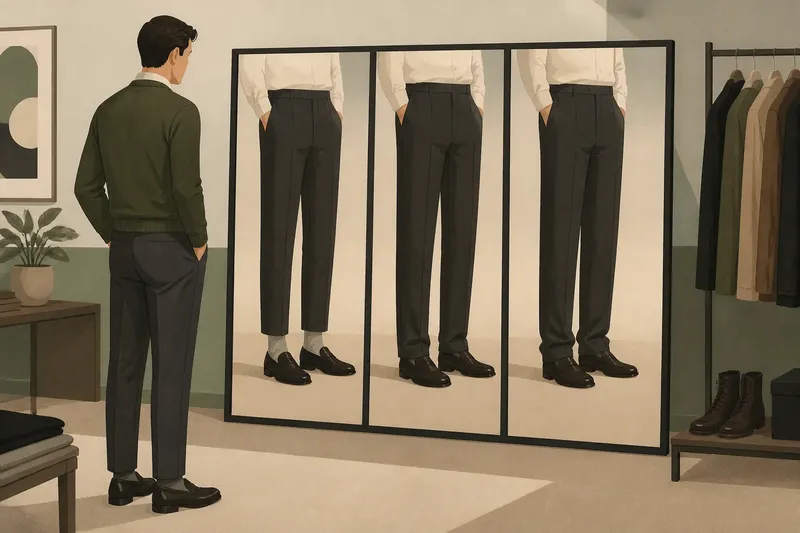
The common mistake with a trouser hem is judging it while looking only at the trouser leg. A hem changes the visible break between cloth and shoe, which can make the whole silhouette seem longer, heavier or more interrupted than you intended. To compare trouser hem lengths, start with the shoes you actually plan to wear and observe where the fabric ends in relation to them.
Choose the shoes first
Put on the shoes that will usually accompany the trousers. A flat loafer, a lace-up shoe and a boot present different amounts of visible upper; a heel also changes how the trouser leg falls. If you assess the hem in bare feet, then dress around it later, you are comparing a different outline.
Wear the trousers at their natural waist or usual position, and fasten them as you normally would. Check that the waistband is sitting where it will sit through the day. Pulling the fabric up or down just for the mirror can shift the crotch and alter the apparent length of the leg.
Stand on a level floor in ordinary posture. Let your arms rest and your feet sit naturally rather than holding a fashion pose. You want to see the garment’s real relationship to the shoe, not a shape created by pointing your toes or stretching your legs.
Use the shoes that belong with the outfit before deciding what the hem should do.
Read the fabric break
The “break” is the point where a trouser leg meets or folds against the shoe. With a shorter hem, the cloth may stop above the shoe and leave the ankle or sock visible. With a longer hem, it may rest on the shoe’s upper and form a fold. Between those choices, the fabric can touch lightly without making a pronounced crease.
Look at the front first. Does the hem hover above the shoe, skim its upper, or bunch into a fold? Then turn sideways to see whether the back of the leg is dragging or sitting cleanly. Finally, check from behind: a hem can appear balanced at the front while the heel catches excess cloth.
Notice where the eye travels. A clear strip of sock can make the shoe and trouser leg read as separate shapes. A soft fold can join them visually, while a pile of fabric can draw attention to the ankle and shoe. None of these effects is automatically wrong; the question is whether the break suits the rest of the outfit.
Compare the whole outline
Assess the hem alongside the leg’s width and the shoe’s shape. A wide trouser leg carries more visual weight than a narrow one, so the same amount of fabric resting on the shoe may look more substantial. A sleek shoe can appear overwhelmed by a deep fold, while a chunkier shoe may sit comfortably beneath a fuller leg.
Look at the silhouette from head to toe rather than treating the ankle as a separate styling problem. A visible gap can emphasise the shoe; a longer line can make the trouser and shoe feel more connected. Consider the jacket or top too: a cropped top and shorter hem leave more space around the leg, while longer layers can make the outfit feel visually continuous.
Imagine you are comparing straight-leg trousers with a low-profile loafer. In one version, the hem ends just above the shoe and shows a narrow band of sock; in another, it rests lightly on the loafer. The first version makes the ankle break more noticeable, while the second connects the leg to the shoe. If the outfit already has a strong contrast at the waist or jacket, you might prefer the quieter connection; if the shoe is the focus, the visible gap may serve the outfit better.
Try the length in order
To make a useful comparison, change one thing at a time. Keep the shoes, top and trouser position the same, then fold or pin the hem temporarily. Use a mirror at a distance that shows your full outline, and take a front and side view if a second perspective helps you judge the break.
- Start with the current hem and note where it meets the shoe from the front and side.
- Fold the fabric up slightly, securing it with a temporary pin or fabric clip, and check the new break.
- Let the hem down to its original position, then try a longer fold if there is enough fabric to compare it safely.
- Walk a few steps and sit down briefly; watch whether the fabric catches, rides up or settles differently.
- Compare the versions in the full outfit and choose the one whose break looks intentional and feels manageable.
Temporary folds are for comparison, not a substitute for a finished hem. If you are unsure about the available allowance or the fabric’s care, check the garment label or ask a tailor before altering it.
Questions about trouser hems?
Should trousers touch the shoe?
They can, but they do not have to. A hem that rests lightly on the shoe creates a different break from one that stops above it; choose according to the leg shape, footwear and outline you want.
Does a shorter hem always make legs look longer?
Not necessarily. Showing more ankle can create a clear visual division, while a continuous line down to the shoe can also read as elongated; the effect depends on the whole outfit and the contrast between its parts.
How do I compare hems with different shoes?
Judge each length with the shoes you expect to wear with it. If you need the trousers to work with several pairs, compare those pairs in turn and decide whether one hem gives a workable break across the group or whether separate alterations make more sense.
What if one trouser leg looks longer?
Stand evenly and check the waistband before judging; a shifted garment or uneven stance can create a false difference. If the imbalance remains when you stand naturally, have a tailor assess the trousers while you wear the intended shoes.
Choose your own break
There is no single correct hem length for every trouser, shoe and wearer. A crisp, short break may suit a deliberate gap at the ankle; a light touch on the shoe may better support a continuous line; a fuller fold may work with a wider leg and substantial footwear.
Use the mirror comparison to make the choice visible, then consider how often you will wear the shoes and whether the fabric behaves comfortably as you move. The best trouser hem length is the one that gives the silhouette the emphasis you want without making the shoe, ankle or gathered cloth look accidental.